The Story
By the time I met Oliver, he already had a reputation.
I hadn't watched that reputation develop. I inherited it.
Around the school he was known as "The Octopus."
Not because he was trying to hurt anyone.
Because he was always reaching out. Touching classmates. Invading personal space. Wrapping his arms around whoever happened to be nearby.
If you asked people about Oliver, this was usually the first thing they mentioned.
Not his smile.
Not his determination.
Not his potential.
His behaviour.
It would have been easy to accept that reputation as truth.
But the more time I spent with him, the more I noticed something everyone else seemed to have missed.
Oliver wasn't trying to annoy people.
He was trying to connect with them.
At the time, his communication was very limited. He wasn't speaking in sentences. Most of his communication consisted of single sounds, gestures and reaching towards the people around him.
Touch was one of the only reliable ways he knew to say,
"Notice me."
Once I understood that, the behaviour made sense.
So instead of spending all day telling Oliver what not to do, I decided to show him what success looked like.
During our lessons on the floor, I moved where he sat so he was diagonally in front of me. Close enough that I could quietly prompt him before he reached for someone else, without interrupting the lesson.
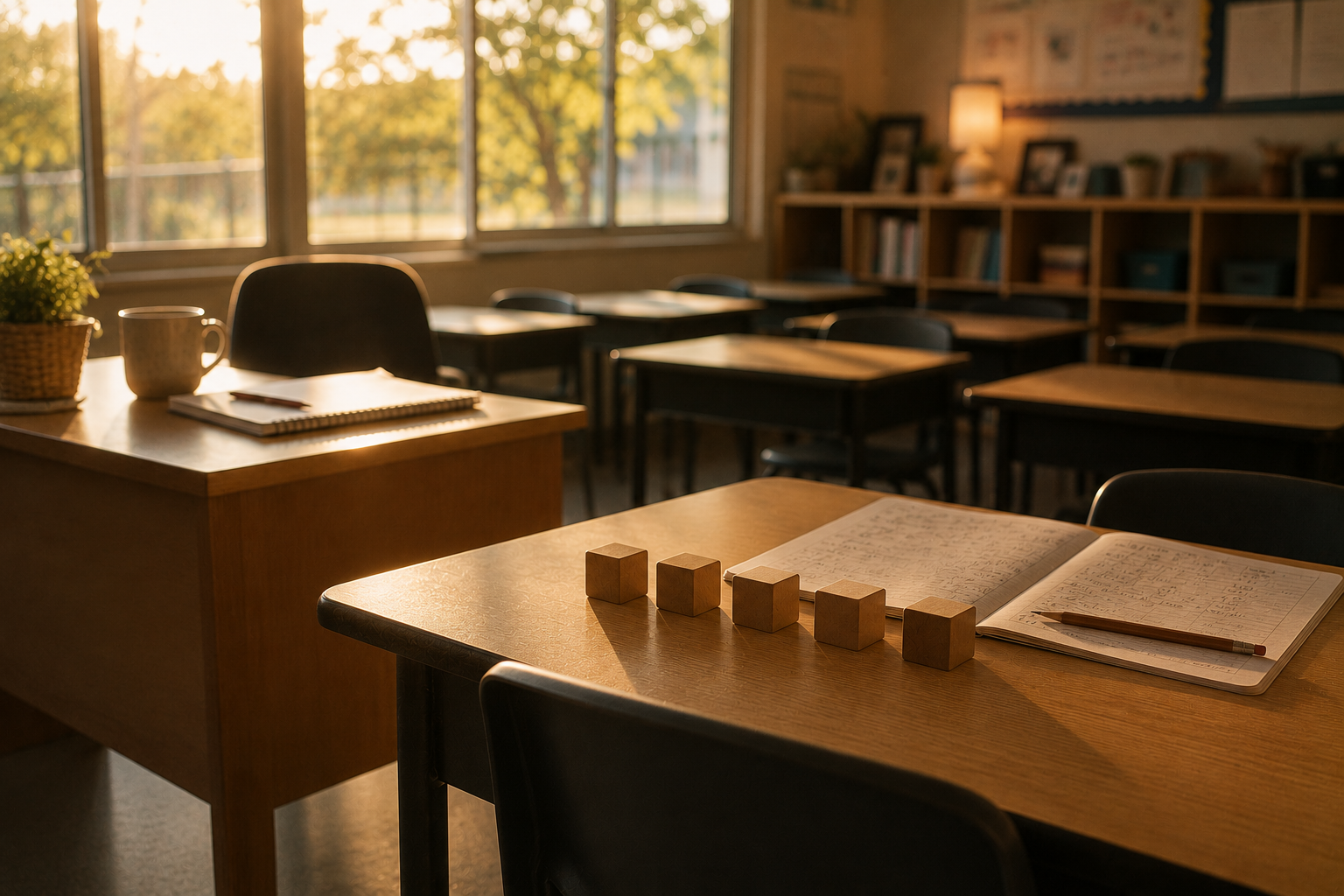
Every time Oliver managed to keep his hands to himself for two minutes, I quietly handed him a small wooden block.
No fuss.
No interruption.
Just quiet acknowledgement that he had been successful.
Five wooden blocks earned a small reward.
When two minutes became comfortable, we stretched it a little longer.
Then a little longer again.
At the same time, we taught Oliver other ways to gain attention. Instead of reaching for people, he learnt that he could communicate differently and still be seen.
Slowly, the reaching happened less often.
Not because we punished it.
Because he no longer needed it.
The changes weren't dramatic.
They were small.
Almost invisible from one day to the next.
But over weeks and months they added up to something extraordinary.
Oliver began recognising his own name.
His confidence grew.
He smiled more.
He greeted me with excitement each morning.
Like every child, he still had good days and difficult days. Progress was never perfectly straight.
One afternoon he proudly helped himself to another student's chicken nuggets.
The funniest part?
Oliver was a vegetarian.
His parents laughed when I told them.
Not because taking someone else's lunch was acceptable.
But because something had changed between us.
When I first met Oliver's family, they were used to conversations that began with everything that had gone wrong.
Every phone call.
Every meeting.
Every report.
Another reminder of what their son couldn't do.
The first time I spoke to them about something Oliver had done well, they cried.
They were so surprised to hear positive news that they visibly relaxed.
For perhaps the first time in a long time, they weren't bracing themselves for criticism.
From that moment, our relationship changed.
Instead of dreading conversations, they looked forward to them.
We celebrated progress together.
We laughed together.
We solved problems together.
By the end of the year, Oliver received my Most Improved Student award.
I still remember looking across at his parents.
They weren't just proud because he'd received an award.
They were beaming because someone had finally seen their son for the person he could become, rather than the behaviours he was trying to overcome.
That moment has stayed with me ever since.
Not because Oliver became perfect.
He didn't.
But because changing the conditions changed what became possible.
For Oliver.
For his parents.
And for everyone who finally had the chance to see him differently.
What I Noticed
Looking back, I've realised this story was never really about keeping hands to yourself.
It wasn't even about wooden blocks.
It was about what happens when we stop defining people by the behaviour that challenges us most.
Once someone has a reputation, it becomes surprisingly easy to collect evidence that confirms it. Every difficult moment reinforces what we already believe, while the small successes often pass unnoticed.
Oliver needed support to learn new ways of connecting with the people around him.
His parents needed something just as important.
They needed someone to notice their son's progress.
The moment our conversations shifted from problems to possibilities, everything else began to change. Trust grew. Partnership grew. Hope grew.
I've continued to notice the same pattern in schools, workplaces and leadership teams.
When people feel seen for who they are becoming instead of judged for who they have been, they often begin to see new possibilities in themselves.
Sometimes the smallest changes don't just transform behaviour.
They transform relationships.
Reflection
- Who in your workplace is known more for their reputation than their potential?
- What strengths or small successes might you have stopped noticing?
- How could changing what you notice change what becomes possible for someone else?
Related Principle
Behaviour provides information.
People rarely struggle in isolation.
They respond to the conditions around them.
When we become curious enough to understand the need beneath the behaviour, different possibilities begin to emerge.
Small changes create extraordinary outcomes.
Oliver